Utilization of AI by JMA
Introduction
The Japan Meteorological Agency (JMA) continuously incorporates scientific and technological advances into its observation and forecasting, pursuing constant innovation toward enhanced disaster risk reduction information.
In this context, the Agency gained various insights from research conducted with the RIKEN Center for Advanced Intelligence Project from 2019 to 2023 on the utilization of advanced AI technologies, such as deep learning in meteorological observation and forecasting.
AI weather models that utilize reanalysis data and other resources as training content for forecasting have emerged in today's environment of rapid progress with AI, and the application of AI as a whole is rapidly expanding.
JMA works to enhance disaster risk reduction information using this technology as part of efforts toward its goals for 2030 and beyond.
|
AI utilization in JMA operations
|
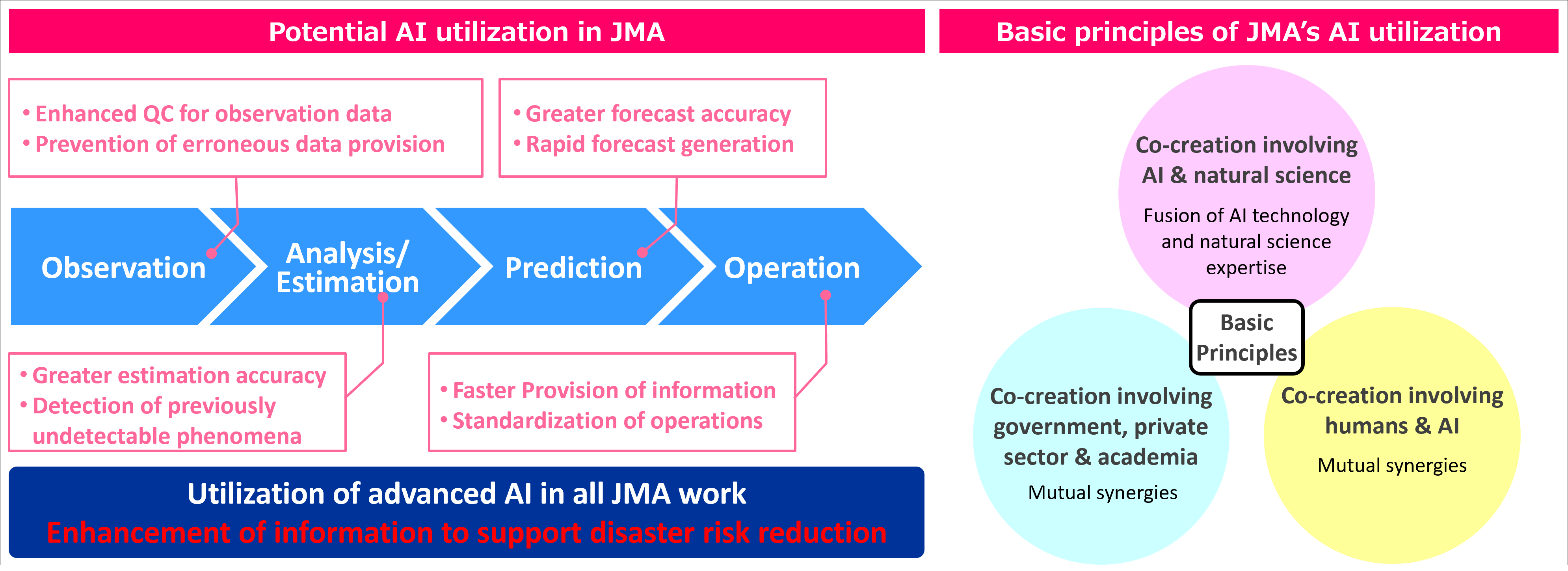
A 2024 JMA study examining potential applications for advanced AI throughout the Agency's operations indicated scope for enhancement by leveraging the technology for sophisticated reasoning based on a diversity of training data.
This includes better weather forecast accuracy based on the combination of new AI weather models with conventional numerical weather prediction (NWP) systems, enhanced quality in the observational data that forms the core of JMA operations, increased precision in analysis and estimation based on observational data, and provision of AI-based task support.
|
|
|
The following are examples of specific usage scenarios:
|
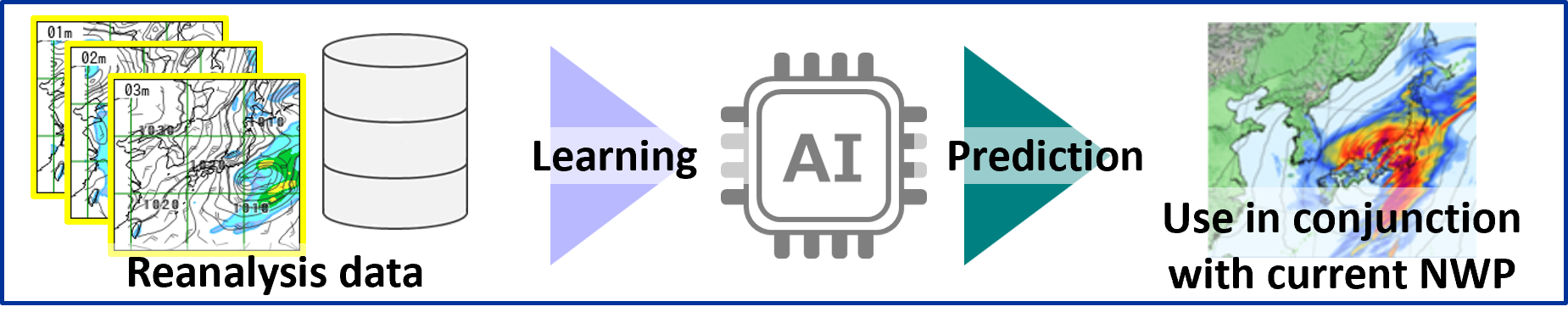
- Improved forecast accuracy based on the combination of AI weather models with conventional NWP systems (prediction)
|
|
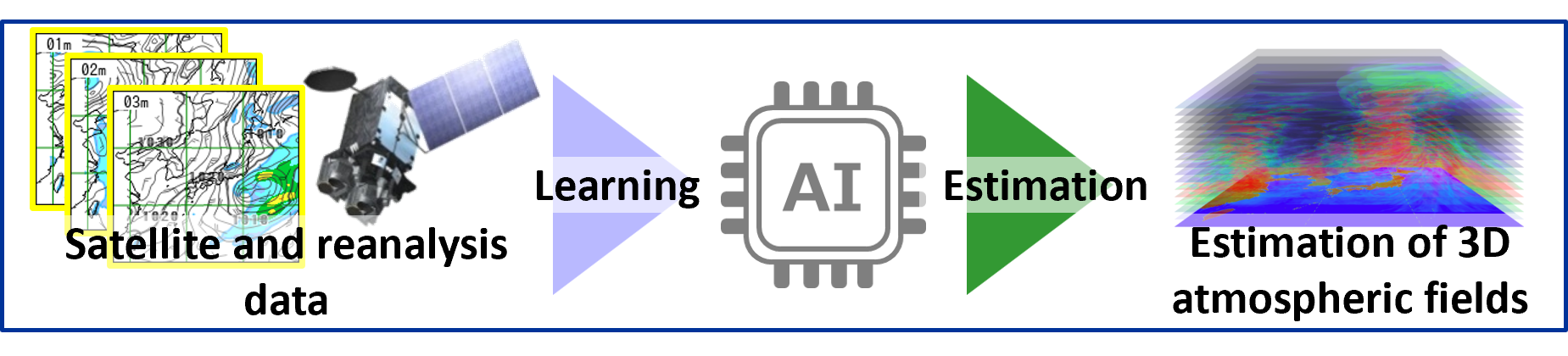
- AI processing of vast amounts of observational data obtained from the latest sensor of the next-generation Himawari satellite (analysis and estimation)
|
|
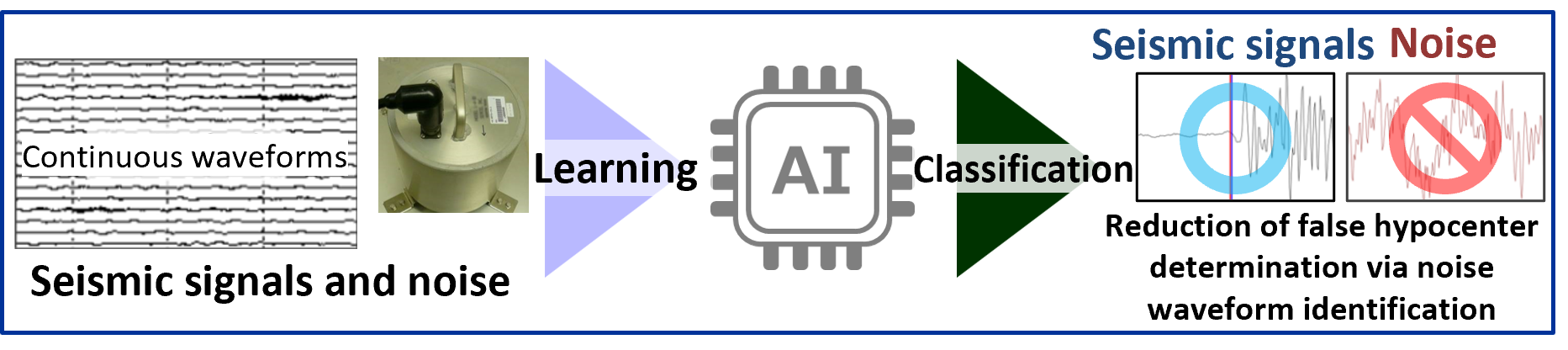
- Advanced utilization of earthquake observation data using AI (observation)
|
|
Efforts toward realization
JMA plans to promote the following initiatives for effective utilization of enhanced disaster risk reduction information by applying advanced AI technology to all aspects of meteorological operations, thereby contributing to disaster risk reduction:
- Utilizing of meteorological reanalysis data, meteorological satellite data and other data as a training base for AI
- Promotion of research and technological development in advanced AI leveraging insights from natural sciences
- Establishment of computational resources, such as high-performance computing systems suitable for efficient AI calculation
- Strengthening of public-private partnerships to facilitate collaboration in technological development, sharing of expertise in AI risks and challenges, and other related efforts
|